Introduction to Forja
Forja (Spanish: forge) — an open-source multi-site CMS where you forge your content. Like a blacksmith shapes raw metal into something useful, Forja lets you shape, manage, and deliver content across multiple sites from a single powerful backend.
Forja is built with a Rust backend (Rocket 0.5.1), a React admin dashboard (Vite + MUI), and pluggable frontend templates (Astro, Next.js, etc.). It is designed for developers who want a fast, type-safe CMS they can self-host, extend, and integrate into their own stack.
Why Forja?
Most headless CMS platforms are either too heavy, too opinionated, or too expensive for developers who just need a solid API behind their portfolio or blog. Forja fills that gap:
- Built in Rust -- the backend compiles to a single binary, starts in milliseconds, and handles thousands of requests per second with minimal resource usage.
- Multi-tenant by design -- run multiple sites from a single instance, each with its own content, navigation, and settings.
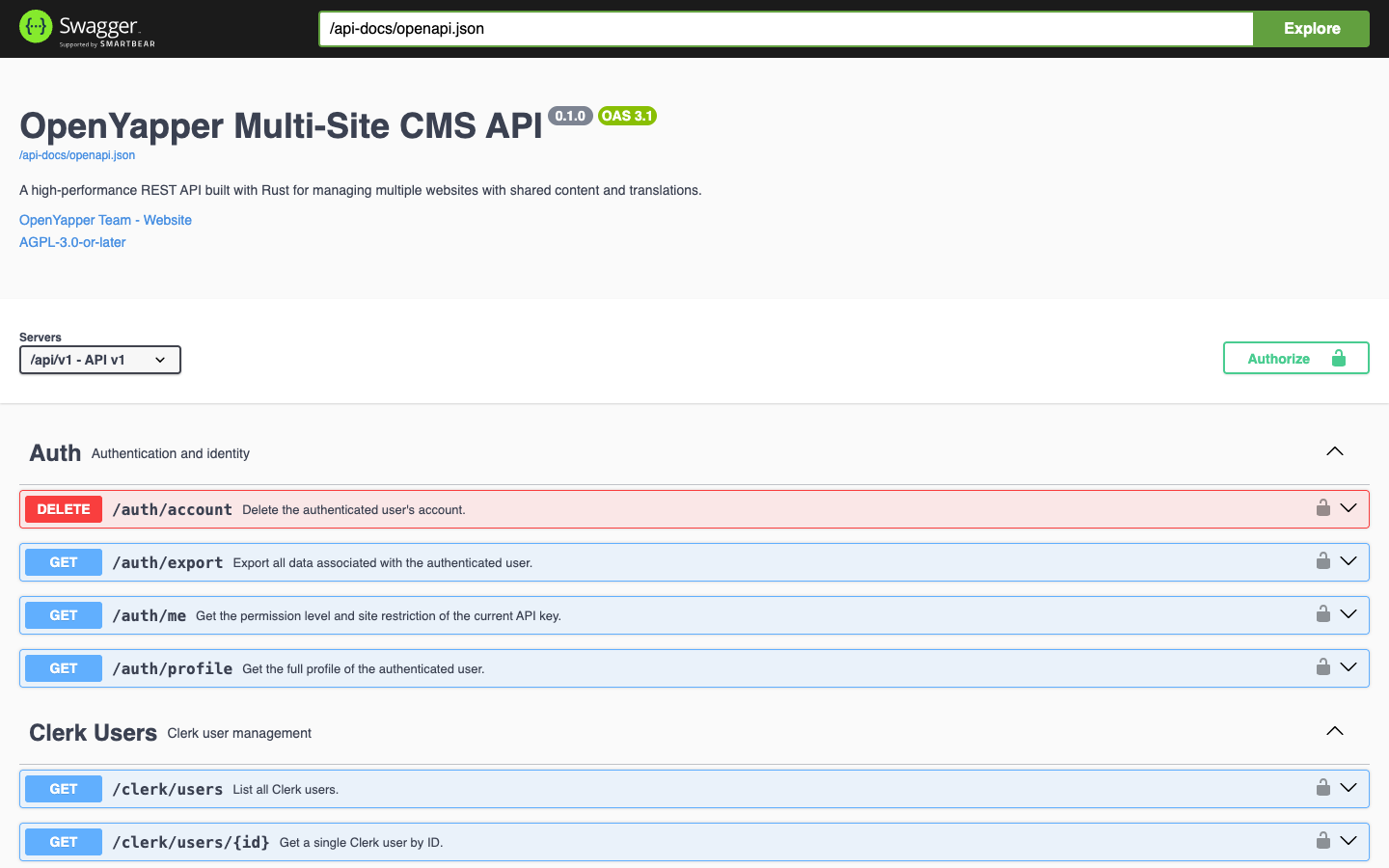
- Developer-first -- every resource is available through a RESTful JSON API with full OpenAPI (Swagger) documentation.
Key Features
| Area | What you get |
|---|---|
| Multi-site | Create and manage multiple independent sites from one installation |
| Content types | Blog posts, static pages, CV entries, legal pages, documents |
| Media library | Upload, crop, and serve images with local or S3 storage |
| Navigation | Hierarchical navigation menus with drag-and-drop ordering |
| Taxonomy | Categories and tags with full i18n support |
| Internationalization | Localized content fields, navigation titles, and admin UI |
| Authentication | Dual auth -- API keys (X-API-Key) and Clerk JWTs (Authorization: Bearer) |
| RBAC | Four permission levels: Master > Admin > Write > Read |
| Webhooks | Event-driven webhook delivery with retry and delivery logs |
| Redirects | 301/302 URL redirect management per site |
| Audit logging | Track who changed what, and when |
| Content scheduling | Publish and unpublish content on a schedule |
| Block editor | Rich text editing with slash commands, tables, code highlighting, and media picker |
| AI Content Assist | Generate blog drafts, SEO metadata, excerpts, and translations via configurable LLM providers |
| Privacy-first analytics | Pageview tracking without cookies or PII -- GDPR-friendly by design |
| Site modules | Enable only the features you need per site (blog, pages, CV, legal, documents, AI) |
| RSS feeds | Auto-generated RSS 2.0 feeds for blog content |
| Notifications | In-app notification system for admin users |
| Templates | Pluggable frontend templates (ships with an Astro blog template) |
Architecture at a Glance
┌─────────────┐     ┌──────────────────┐     ┌───────────────┐
│  Frontend   │────▶│  Rust Backend    │────▶│  PostgreSQL   │
│  (Astro,    │     │  (Rocket 0.5)    │     │               │
│   Next.js)  │     │  /api/v1/*       │     └───────────────┘
└─────────────┘     │  /api-docs       │     ┌───────────────┐
                    │                  │────▶│  Redis        │
┌─────────────┐     │                  │     │  (rate limit) │
│  Admin UI   │────▶│                  │     └───────────────┘
│  (React +   │     └──────────────────┘     ┌───────────────┐
│   MUI)      │                              │  S3 / Local   │
└─────────────┘                              │  (media)      │
                                             └───────────────┘
- Backend -- Rust with Rocket 0.5, SQLx, PostgreSQL. Serves the JSON API at
/api/v1and Swagger UI at/api-docs. - Admin -- React SPA built with Vite, Material UI, React Query, react-hook-form, and zod. Served at
/dashboardin production,localhost:5173in development. - Frontend templates -- Statically generated sites that consume the API. An Astro blog template ships out of the box at
templates/astro-blog/.
Screenshots
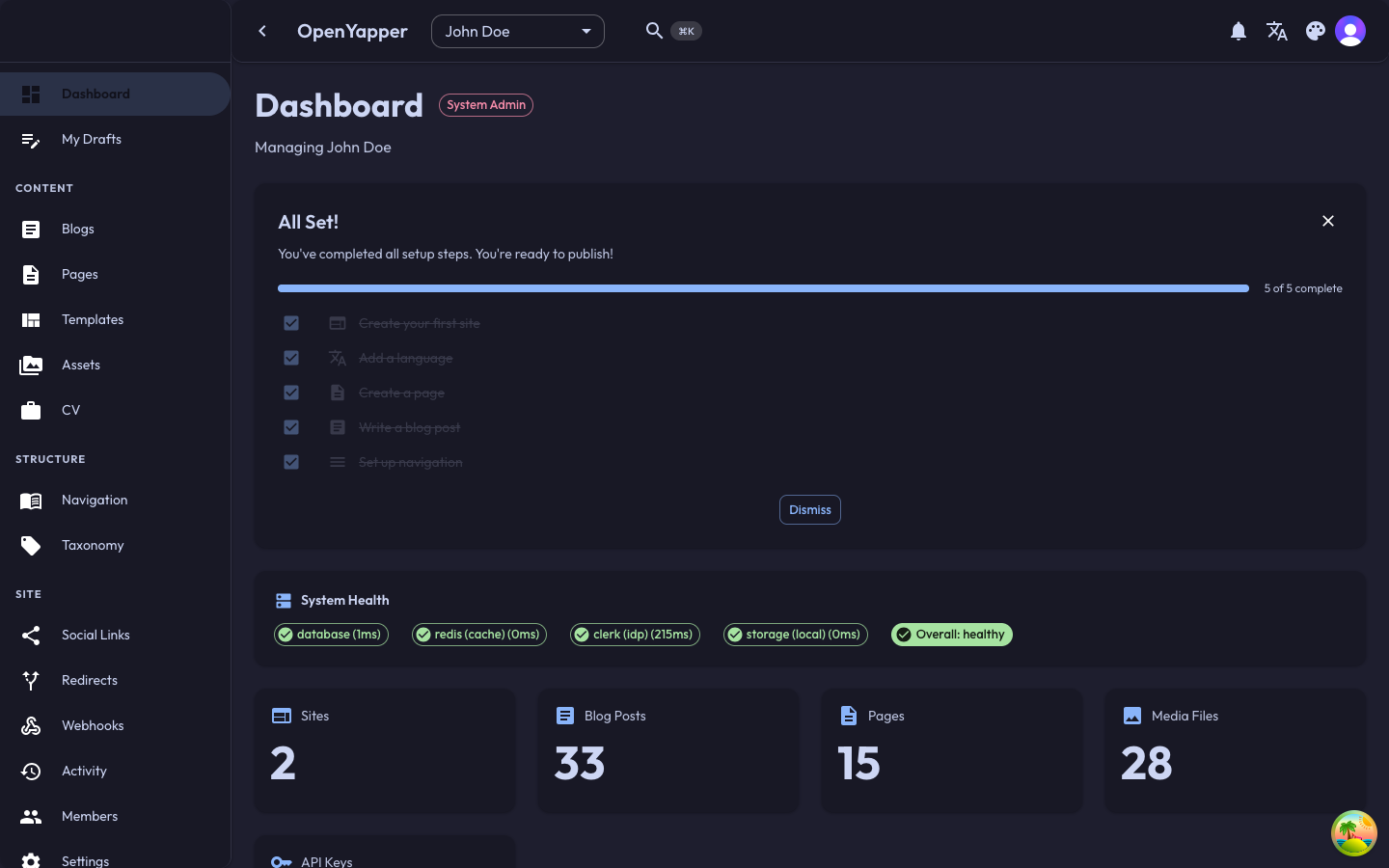
Admin Dashboard -- System health, content stats, and setup checklist:
Swagger UI -- Interactive API documentation with all endpoints:
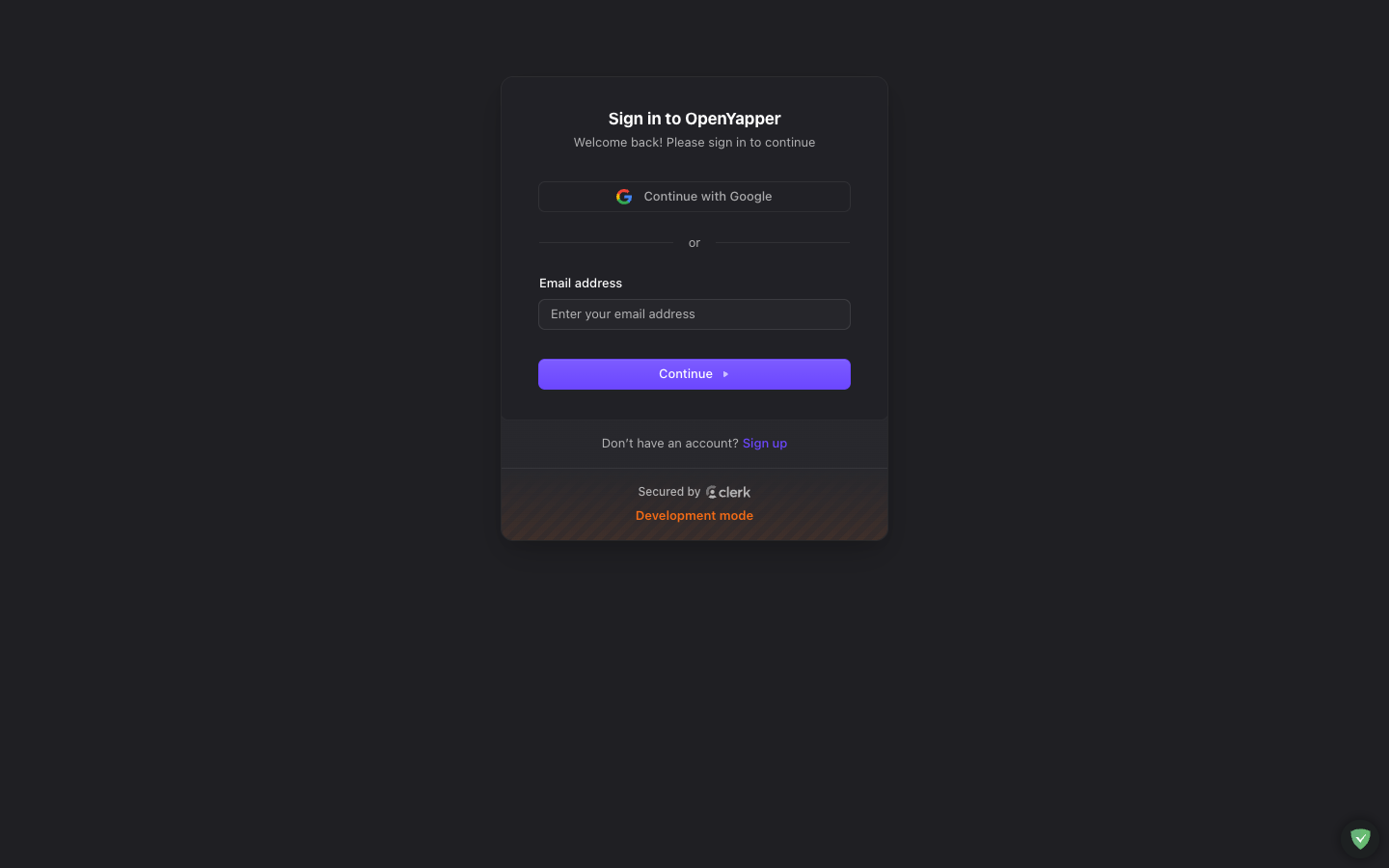
Admin Login -- Clerk-powered authentication with social login support:
Quick Links
- Prerequisites -- what you need installed before you begin.
- Installation -- clone, configure, and install dependencies.
- First Run -- start the dev environment and verify everything works.
- Configuration -- full reference of all environment variables.
- API Reference -- explore every endpoint with request/response examples.
- Admin Guide -- learn how to manage content through the dashboard.
- AI Content Assist -- set up AI-powered content generation.
- Analytics -- privacy-first pageview tracking.
- Architecture -- deep dive into the system design.
License
Forja is released under the AGPL-3.0-or-later license. You are free to use, modify, and distribute it, provided that any modified versions you deploy as a network service also make their source code available under the same license.